

SEO Audit Tutorial: Optimize Your Website for Rankings
If you want to improve your website’s visibility on search engines, then performing an SEO audit is the first and most essential step in the process. SEO audits are the foundation of an effective SEO strategy, and they allow you to identify areas of improvement for your website, ensuring that it performs at its best.
In this tutorial, we’ll walk you through everything you need to know about conducting an SEO audit and how to use it to optimize your website for higher rankings.
What is an SEO Audit?
An SEO audit is a comprehensive review of your website’s current SEO performance. It helps you identify technical issues, on-page optimizations, content-related challenges, and external factors that can impact your site’s ability to rank in search engine results pages (SERPs). In simpler terms, an SEO audit helps you understand how well your website is optimized for search engines and which areas need improvement.
The main goal of an SEO audit is to uncover issues that are preventing your site from ranking higher and then fix those issues. Whether you’re a beginner or a seasoned SEO professional, conducting regular SEO audits will help ensure your website’s performance is always improving.
Why Do You Need an SEO Audit?
Performing an SEO audit is crucial for several reasons:
-
Improves Search Rankings: An SEO audit highlights issues that are preventing your site from ranking well. By addressing these problems, you can significantly improve your search engine rankings.
-
Boosts Website Traffic: When your site is optimized and ranks higher, it will attract more organic traffic from search engines, leading to greater visibility and potential business opportunities.
-
Enhances User Experience: Many aspects of SEO, such as site speed and mobile optimization, also improve the overall user experience. A website that’s user-friendly will lead to better engagement and higher conversions.
-
Keeps You Ahead of Competitors: A detailed SEO audit helps you stay competitive by ensuring that your site’s performance is on par with industry standards and ahead of your competitors.

Key Steps in Conducting an SEO Audit
To get started with your SEO audit, follow these key steps:
1. Perform a Website Crawl
The first step in any SEO audit is to perform a website crawl. Crawling your site helps you identify broken links, duplicate content, missing meta tags, and other technical issues that could negatively impact your SEO performance.
You can use a variety of tools to crawl your website. These tools will give you a comprehensive report on any crawl errors, such as 404 (page not found) errors, redirect issues, and missing pages. Fixing these issues ensures that search engines can crawl and index all your pages correctly.
2. Analyze Site Speed
Page speed is one of the most important factors in SEO. Websites that load slowly can negatively affect your rankings and user experience. Google has made it clear that site speed is a ranking factor, especially for mobile users.
To test your site’s speed, you can use tools like Google PageSpeed Insights or GTMetrix. These tools will provide detailed insights into your site’s performance, including recommendations for speeding up your website. Common suggestions may include compressing images, minifying JavaScript and CSS, and improving server response times.
3. Mobile-Friendliness Check
With the increasing use of smartphones and tablets, mobile-friendliness is crucial for SEO. Google uses mobile-first indexing, meaning it prioritizes the mobile version of your site for ranking purposes.
To check whether your site is mobile-friendly, you can use Google’s Mobile-Friendly Test tool. If your site is not optimized for mobile users, it’s important to make the necessary adjustments. Mobile optimization involves ensuring that your site design is responsive, the content is easy to read, and the navigation is user-friendly on smaller screens.
4. Review On-Page SEO
On-page SEO refers to the elements on your website that you can optimize to improve rankings. This includes title tags, meta descriptions, header tags, and content. To review your on-page SEO, go through each page of your site and check the following:
-
Title Tags: Are they descriptive and optimized with relevant keywords?
-
Meta Descriptions: Are they engaging and under 160 characters? Do they include your primary keyword?
-
Header Tags (H1, H2, H3): Are your headers properly structured? Do they include relevant keywords to guide search engines and users?
-
Content: Does your content match the user’s search intent? Is it original, informative, and relevant?
Optimizing these on-page elements helps improve your website’s visibility and relevance to search engines.
5. Check for Broken Links
Broken links are detrimental to both user experience and SEO. If users click on a link and are directed to a “404 Not Found” page, it can create frustration and lead to higher bounce rates. Additionally, broken links hinder search engine crawlers from indexing your website properly.
Using tools like Screaming Frog or Ahrefs, you can identify and fix any broken internal or external links. Redirecting or removing broken links is essential to maintaining a healthy website.
6. Backlink Profile Analysis
Backlinks are one of the most important ranking factors in SEO. They act as votes of confidence from other websites, signaling to search engines that your site is trustworthy and authoritative. However, not all backlinks are created equal.
An SEO audit should include an analysis of your backlink profile. Check the quality and relevance of the websites linking to you. If you find any toxic or spammy backlinks, it’s essential to disavow them to avoid penalties from search engines. Building high-quality backlinks should remain a key focus of your ongoing SEO efforts.
7. Review Analytics and Keyword Rankings
Finally, review your website’s performance using analytics tools like Google Analytics and Google Search Console. These tools provide insights into your website traffic, user behavior, and keyword rankings.
By monitoring keyword performance, you can determine which keywords are driving traffic to your site and which ones may need further optimization. This data can help you refine your SEO strategy for better results.
Conclusion
Conducting an SEO audit is a critical part of optimizing your website for higher search rankings. By identifying and addressing technical, on-page, and external SEO issues, you can significantly improve your site’s visibility and user experience. Remember, an SEO audit is not a one-time task; it should be done regularly to ensure your site remains in top form.
Start your SEO audit today to take the first step toward improving your website’s performance and ranking higher on search engines!
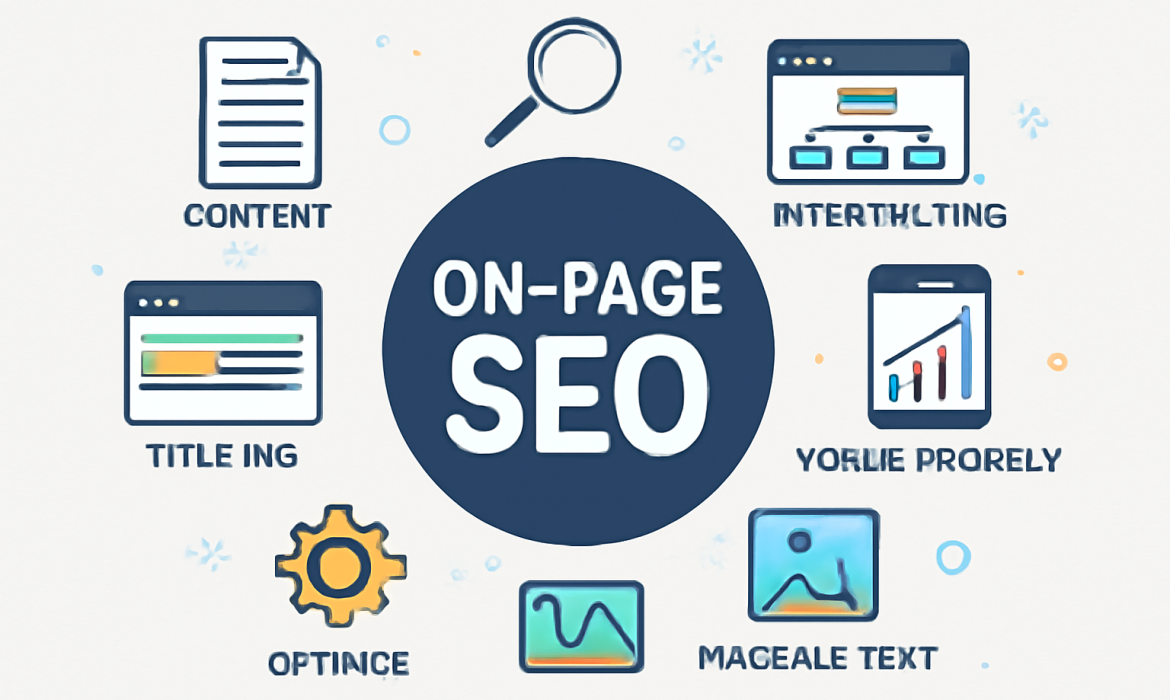
Complete Guide to On-Page SEO
In the ever-evolving world of digital marketing, search engine optimization (SEO) has become a crucial tool for businesses and websites seeking to enhance visibility and drive organic traffic. Among the many components of SEO, On-Page SEO plays a crucial role in ensuring your content ranks higher in search engine results. By optimizing your web pages, you enhance the likelihood of being discovered by search engines like Google, making it an essential practice for any website.
In this complete guide, we’ll walk you through the step-by-step process of On-Page SEO. We’ll explain why it’s so important, how it works, and the best practices to follow to boost your website’s performance.
What is On-Page SEO?
Before diving into the details, it’s essential to understand what On-Page SEO is. On-Page SEO refers to the process of optimizing individual web pages in order to rank higher and attract more relevant traffic. This includes optimizing both the content and HTML source code of a page.
Unlike, which involves external factors like backlinks, On-Page SEO focuses entirely on elements within your website. It ensures that search engines can easily understand the context and relevance of your content, improving your chances of ranking higher for targeted keywords.
Why is On-Page SEO Important?
On-Page SEO is crucial because it directly impacts how search engines interpret and rank your website. When done correctly, it helps:
-
Increase Visibility: Proper On-Page SEO increases the chances of ranking higher in search results, ensuring more people discover your website.
-
Improve User Experience (UX): Optimizing your website’s structure, speed, and content also enhances user experience, leading to higher engagement and lower bounce rates.
-
Drive Targeted Traffic: By focusing on specific keywords and search intent, On-Page SEO ensures that your content is visible to the right audience.
-
Boost Credibility and Trustworthiness: A well-optimized site builds trust with search engines, helping your website appear as a credible and relevant source of information.
Step-by-Step Process of On-Page SEO
Here’s a detailed, step-by-step guide to help you implement On-Page SEO successfully:
1. Keyword Research and Selection
The first step in On-Page SEO is choosing the right keywords. Keywords are the terms or phrases people use when searching for information online. Select keywords that are relevant to your content and have a high search volume but low competition.
-
Tip: Use tools like Google Keyword Planner or Ubersuggest to find relevant keywords that can help you attract organic traffic.
Once you’ve selected your keywords, ensure they are strategically placed throughout your page to improve its ranking.
2. Optimize the Title Tag
The title tag is one of the most important elements for SEO. It appears as the clickable headline in search results, and it helps both search engines and users understand the topic of the page.
-
Best Practices:
-
Keep the title under 60 characters.
-
Place the primary keyword near the beginning.
-
Ensure it’s compelling to encourage click-throughs.
-
3. Meta Description Optimization
Although the meta description doesn’t directly affect rankings, it plays a vital role in attracting clicks from search results. A well-written meta description provides a summary of your page content.
-
Best Practices:
-
Keep the description between 150-160 characters.
-
Include the main keyword naturally.
-
Make it descriptive and appealing to users.
-
4. Use Proper Heading Tags
Heading tags (H1, H2, H3, etc.) help structure your content and make it easier for search engines to crawl your page.
-
Best Practices:
-
Use one H1 tag for the main heading (which should include your primary keyword).
-
Use H2 for subheadings and H3 for further sections.
-
Organize content logically, with clear, descriptive headings.
-
5. URL Structure Optimization
URLs are important for both user experience and SEO. A clean, descriptive URL tells search engines exactly what the page is about.
-
Best Practices:
-
Keep URLs short and descriptive.
-
Include the primary keyword in the URL.
-
Avoid using unnecessary characters or numbers.
-
6. Content Optimization
Creating high-quality content is one of the most important aspects of On-Page SEO. Your content should be relevant, informative, and easy to understand.
-
Best Practices:
-
Use the target keyword within the first 100 words of the content.
-
Include variations and synonyms of the main keyword to avoid keyword stuffing.
-
Maintain keyword density between 1-2% (i.e., for every 100 words, use the keyword 1-2 times).
-
Write for your audience, not just for search engines. Make sure the content adds value and answers the user’s intent.
-
7. Image Optimization
Images are an essential part of web content, but they can slow down your site if not optimized properly. To ensure your images help rather than hinder your SEO efforts, follow these practices:
-
Best Practices:
-
Compress images to reduce file size.
-
Use descriptive alt text with relevant keywords to improve accessibility and SEO.
-
Choose the right file format (JPG for images, PNG for graphics with transparency).
-
8. Internal Linking
Internal linking helps establish a website’s architecture, allowing users and search engines to navigate your site easily. By linking to other pages within your site, you improve the site’s usability and ensure search engines can index all relevant pages.
-
Best Practices:
-
Link to relevant, high-quality pages on your website.
-
Use descriptive anchor text (the clickable text in a hyperlink).
-
Avoid over-linking; focus on quality over quantity.
-
9. Mobile-Friendliness
With mobile traffic accounting for a significant portion of web visitors, it’s essential that your website is mobile-friendly. Google’s mobile-first indexing means that Google primarily uses the mobile version of the website for ranking.
-
Best Practices:
-
Ensure your website is responsive and adjusts to different screen sizes.
-
Test your site on various devices to ensure a smooth mobile experience.
-
Use large, easy-to-click buttons and clear navigation.
-
10. Page Speed Optimization
Page speed is a critical ranking factor in Google’s algorithm. A slow-loading website can lead to higher bounce rates and a lower ranking.
-
Best Practices:
-
Compress images and use browser caching.
-
Minimize the use of heavy scripts and plugins.
-
Utilize a content delivery network (CDN) to speed up content delivery.
-
How SEO On-Page Strategies Work
SEO On-Page Strategies focus on optimizing individual elements within a page to improve its visibility and relevance. By following these strategies, you ensure that your page is structured in a way that both search engines and users can easily understand. When search engines crawl your site, they look for clues (like keywords, headings, and metadata) to determine how well your page answers a user’s search query.
By consistently applying On-Page SEO strategies, you’ll see gradual improvements in your page’s ranking, leading to more organic traffic and higher conversions.
Conclusion
In conclusion, On-Page SEO is a fundamental component of any successful SEO strategy. By optimizing content, images, title tags, URLs, and other key elements, you ensure that search engines can crawl, index, and rank your website effectively. Following the steps outlined in this guide and implementing SEO On-Page Strategies will help you stay ahead of your competitors and increase your website’s visibility. Whether you’re a beginner or looking to fine-tune your existing SEO efforts, the tips and techniques shared here will provide you with the tools you need to succeed.

